
Aerial Yoga After Strength Training: When Supported Inversions Help and When Fatigue Matters

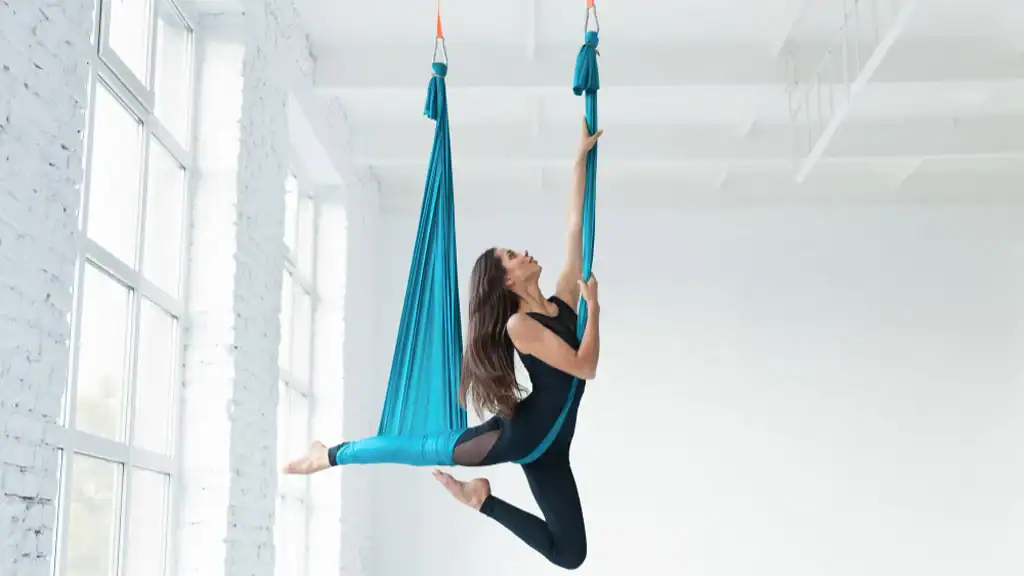
Combining strength training with aerial practice can create a varied weekly routine, but the order of those sessions matters. A class involving aerial yoga may feel relaxing in some sections while still requiring grip strength, trunk control and careful coordination. It should not automatically be treated as passive recovery after a demanding gym session.
Supported inversions may temporarily provide a different sensory and loading experience, but they do not erase muscular fatigue. Participants need to consider what they trained, how recovered they feel and what the aerial class is likely to demand.
Strength Training Can Change Aerial Performance
A heavy gym session affects more than the muscles that feel sore. It may reduce grip endurance, slow coordination and make stabilising movements less precise.
After pulling exercises such as rows, pull-ups or deadlifts, the forearms and upper back may fatigue earlier when holding the hammock. Following squats, lunges or Romanian deadlifts, the hips and legs may feel less controlled during mounting and standing transitions.
Abdominal training can also influence aerial practice. A participant may still complete suspended movements, but maintaining the intended trunk position may require more effort than usual.
The practical question is not whether the person can attend. It is whether fatigue changes their ability to enter, hold and exit positions with control.
Supported Inversions Are Still Active Positions
An inversion supported by fabric may reduce some of the effort associated with holding the body against gravity. However, the participant still needs to manage breathing, body position and the pressure created by the hammock.
The word “supported” can be misleading if it is interpreted as effortless. Depending on the variation, the participant may need to:
- Maintain grip on the fabric.
- Control the legs during entry.
- Stabilise the trunk.
- Manage pressure around the hips or thighs.
- Remain aware of nearby equipment and participants.
- Return to standing without rushing.
These tasks can become harder when strength training has already depleted the relevant muscles.
When the Combination May Feel Useful
A lower-intensity aerial class after moderate strength work can provide movement in directions that were not emphasised in the gym. The hammock may help participants explore spinal movement, shoulder positioning or hip range with a different type of support.
Some people also find that supported positions encourage slower breathing and reduce the sense of stiffness after lifting. This experience is individual and should not be interpreted as proof that the muscles have recovered more quickly.
The combination is most likely to work when:
- The strength session was not performed to exhaustion.
- Grip and shoulder control remain reliable.
- The aerial class allows exercise modifications.
- The participant is familiar with basic hammock transitions.
- There is adequate time for food, hydration and a mental reset.
- The following day does not contain another priority session.
When Fatigue Deserves More Attention
Aerial practice may be a poor choice immediately after strength training if the participant feels light-headed, unusually weak or unable to control simple movements.
Grip fatigue is especially important because a participant may not recognise it until entering a suspended position. Forearms that feel acceptable during daily activities may fail quickly when maintaining a firm hold.
Shoulder fatigue can also affect how the upper arm is positioned. If the participant cannot comfortably support or stabilise the shoulder, hanging and pulling variations should be reduced or avoided.
Other warning signs include:
- Shaking that prevents a controlled transition.
- Difficulty following the entry sequence.
- Cramping in recently trained muscles.
- Loss of confidence during familiar movements.
- Breath-holding during low-demand exercises.
- Soreness that changes normal movement mechanics.
These signs do not need to be pushed through. A supported floor-based variation may provide a better training effect.
Session Order Should Reflect the Priority
If strength development is the main goal, the gym session should generally occur while the participant is fresh. Aerial yoga can follow later at an appropriate intensity or take place on a separate day.
If aerial skill is the priority, attending after heavy upper-body or grip work may reduce the quality of practice. In that case, place the aerial class first or schedule it on a different day.
A weekly arrangement might include strength training on Monday and Thursday, with aerial practice on Tuesday or Saturday. Another person may tolerate a morning gym session followed by an evening class, provided the earlier training volume was moderate.
There is no single schedule for everyone. Training history, sleep, work stress and class intensity all affect recovery.
Adjust the Class Rather Than Forcing the Original Plan
Participants should tell the instructor that they have trained earlier in the day. This allows exercise choices to reflect current capacity.
Possible adjustments include:
- Keeping one or both feet on the floor.
- Reducing time in suspended positions.
- Choosing a simpler entry.
- Limiting repeated pulling actions.
- Using a smaller movement range.
- Taking additional rest between attempts.
- Skipping an inversion if symptoms or uncertainty appear.
Modification is not failure. It is a method of preserving movement quality when the available capacity has changed.
Inversions Are Not a Recovery Treatment
It is tempting to describe inversions as a way to flush toxins, reverse circulation or accelerate recovery. These claims oversimplify human physiology.
The body already manages circulation and metabolic waste through established biological systems. An inversion may feel pleasant, but it should not be presented as a replacement for sleep, hydration, nutrition or appropriate rest.
People with conditions that may be affected by inversion should obtain suitable medical advice. Participants should also inform the instructor about relevant health concerns rather than relying on general online recommendations.
Plan Around the Whole Week
At Yoga Edition, a participant combining aerial classes with strength work can make better decisions by communicating their training load and responding honestly to fatigue. The objective is to leave class with useful practice, not to prove that every planned movement can be completed.
After strength training, supported inversions may offer variety and a different relationship with gravity. Their value depends on the participant’s remaining control, not on the assumption that inversion automatically creates recovery.
When grip, shoulders or concentration are significantly fatigued, reducing the aerial demand is the more productive option. A weekly plan that protects high-quality sessions will produce better results than repeatedly stacking activities without accounting for their combined load.
